By: Efio-Ita Nyok
…Media practitioners equipped with skills to decode health research for public consumption
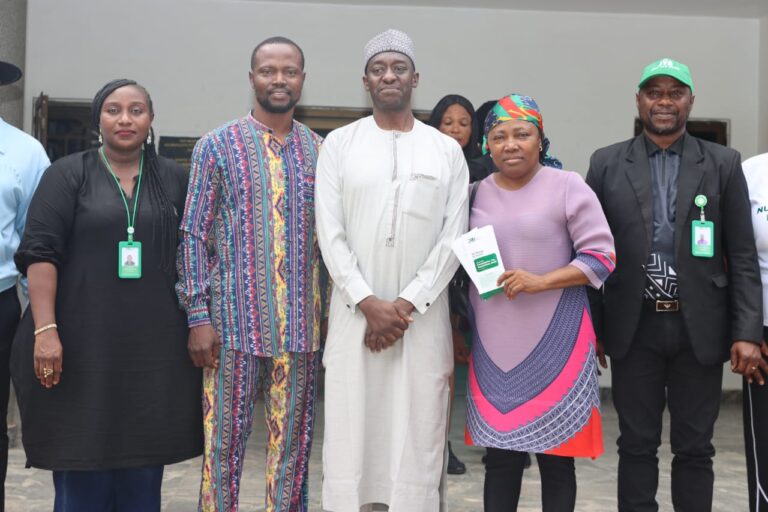
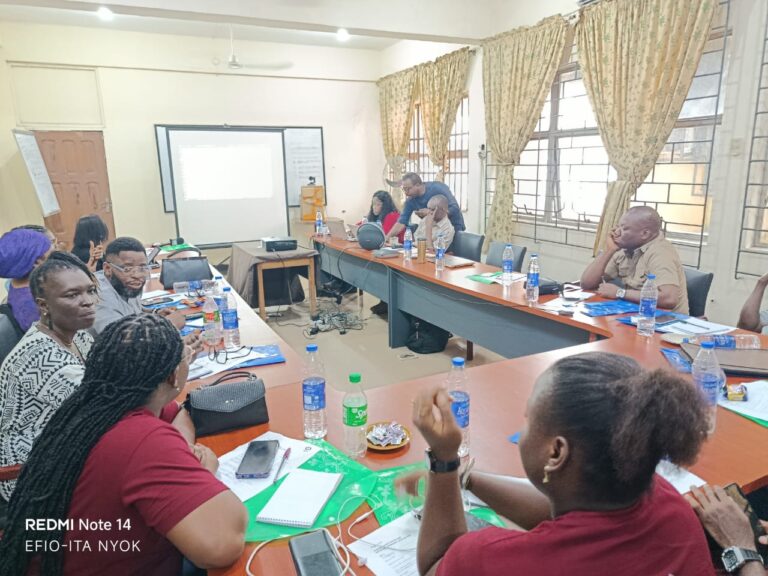
CALABAR –Cochrane Nigeria, the Nigerian branch of the global health research network, has trained journalists in Cross River State on evidence-based healthcare reporting, equipping them with skills to understand, critique, and accurately communicate health research to the public.
The workshop, held in Calabar, brought together journalists from across the state to learn how to read academic papers, identify bias in studies, assess confidence in research findings, and present complex health information in ways that patients, policymakers, and the general public can understand.
Speaking at the event, Cochrane Nigeria Director, Prof. Angela Oyo-Ita, said journalists are essential to ensuring that research does not end up “in the researcher’s drawer” but is used to improve healthcare outcomes.
“Every researcher out there desires that the result of his or her work is used,” she said. “Evidence-based medicine brings out those studies and puts them in a way that can be used — for policymakers, clinicians, and even patients.”
…Understanding Evidence-Based Healthcare
Prof. Oyo-Ita explained that evidence-based healthcare involves using the best available information for care, combining clinical expertise with research findings, and assessing the quality and applicability of studies.
She outlined the process: asking a focused question, searching for relevant information, critiquing sources, pulling findings together through systematic reviews, understanding biases that may have been introduced during studies, determining the level of confidence in findings, and evaluating how applicable the findings are to specific individuals or situations.
“We have so much publication, so much being published on a daily basis,” she noted. “We need to have this summarised in a way that the clinician can be informed, the patient can be informed, and policymakers can be informed to know what the best information is on a particular question and how applicable it is to their own circumstances.”
…Why Journalists Matter
The Director emphasized that journalists are uniquely positioned to tell health stories accurately and communicate effectively with the people.
“Any research that ends up only in the paper or in the researcher’s drawer is not worth its salt,” she said.
The training was designed to help journalists understand how systematic reviews are done, where to source for reviews, how to critique them, and how to interpret technical terms so they can present findings well to the general public.
…Patients, Doctors, and Communication
Prof. Oyo-Ita also addressed the dynamics between patients and doctors, noting that both are on “learning curves.”
She shared insights on how patients who read research can communicate respectfully with their doctors, and how doctors can respond constructively.
“If you now tell them what you are doing is wrong, the mind decides to walk away,” she said. “But there is a way you can communicate with your doctor. It’s a two-way thing.”
…NUJ Commends Cochrane Nigeria
Archibong Bassey, Chair of the Nigeria Union of Journalists (NUJ), Cross River State Council, commended Cochrane Nigeria for the annual capacity-building workshop, describing it as timely and necessary.
“As we do know, as journalists, there is need for us to periodically update ourselves,” Bassey said. “We have been talking about evidence-based healthcare reporting. For those of us who are on the health desk, I am sure the knowledge we’ve gained today will go a long way in assisting us in our reportage. A lot of things have been brought to light today.”
…A Yearly Tradition
The workshop is part of Cochrane Nigeria’s annual engagement with journalists in Cross River State, aimed at strengthening health reporting capacity and ensuring that health research translates into better outcomes for Nigerians.(Negroid Haven)