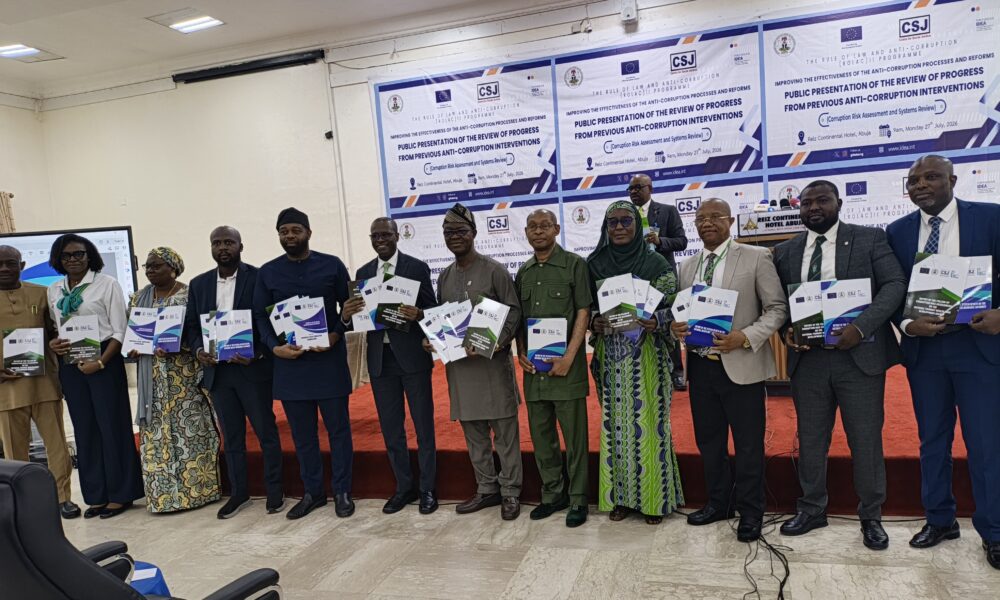
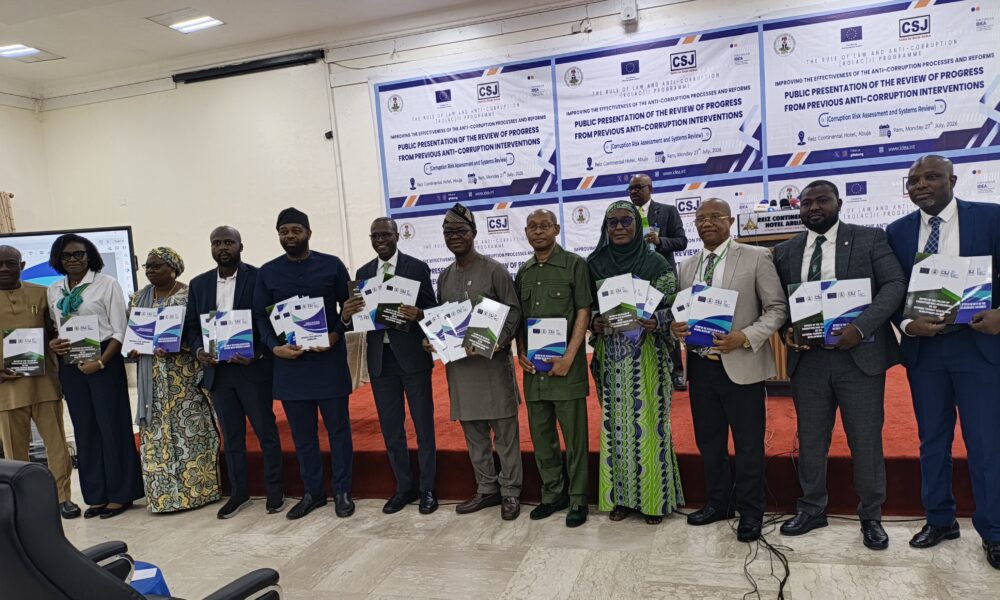
The Independent Corrupt Practices and Other Related Offences Commission (ICPC) has presented corruption risk assessment reports on key public institutions, urging stronger institutional reforms, digital governance, and greater inter-agency collaboration to curb corruption in Nigeria’s health and education sectors.
Speaking at the public presentation of the reports on Monday, ICPC Chairman, Dr. Musa Adamu Aliyu described the initiative as a major milestone in the Commission’s preventive anti-corruption strategy aimed at strengthening transparency, accountability and service delivery.
Aliyu said corruption risk assessments should not end as mere reports but must lead to measurable institutional reforms that improve governance and restore public confidence in public institutions.
According to him, the institutions reviewed occupy strategic positions in Nigeria’s human capital development agenda, as their performance directly affects access to healthcare, primary healthcare services and quality education.
He noted that the assessments identified corruption risks, including leakages in health insurance payments, diversion of medical supplies, ghost workers, procurement irregularities, abandoned school projects and weak oversight mechanisms.
“The corruption risk assessment is not simply an academic exercise. It is a diagnostic tool that enables institutions to identify systemic weaknesses and address them before they negatively affect service delivery and the lives of citizens,” he said.
The ICPC chairman said the Commission had continued to strengthen its own internal governance through transparent decision-making, merit-based recruitment, digitisation of processes, stronger internal audit systems, conflict-of-interest declarations and improved compliance mechanisms.
He identified digital transformation as one of the most effective tools for preventing corruption, noting that technology enhances transparency by reducing human discretion, improving audit trails and increasing operational efficiency.
Aliyu also stressed the importance of ethical leadership, saying institutional reforms can only succeed where leaders demonstrate integrity and promote accountability throughout their organisations.
He recommended the establishment of integrated digital platforms that would allow citizens to monitor health insurance enrolment, primary healthcare services and education projects, while calling for stronger independent oversight, end-to-end e-procurement systems, improved staff welfare and stricter enforcement against abandoned public projects.
Earlier, the Lead Director of the Centre for Social Justice (CSJ), Dr. Eze Onyekpere said the organisation collaborated with the ICPC, with support from the European Union-funded Rule of Law and Anti-Corruption Programme, to review the implementation of recommendations arising from previous corruption risk assessments.
He explained that the review focused on three critical institutions: the National Health Insurance Authority (NHIA), the National Primary Health Care Development Agency (NPHCDA), and the Universal Basic Education Commission (UBEC).
According to him, the project aims to improve the effectiveness of anti-corruption laws, policies and reforms at both national and sub-national levels, while strengthening compliance with anti-corruption standards.
He said corruption prevention requires continuous engagement, implementation of recommendations and cooperation among anti-corruption agencies, regulatory institutions, civil society organisations and development partners.
The CSJ lead Director also called for institutionalised peer reviews and continuous dialogue among public institutions to encourage the sharing of best practices and improve governance.
Also speaking at the event, the European Union representative, a development partner representative, Emma Uche commended the ICPC for prioritising preventive anti-corruption measures over enforcement alone.
He said Nigeria’s anti-corruption efforts must focus on building systems that prevent corruption from occurring rather than relying solely on prosecution after public resources have been lost.
The representative praised the ICPC’s collaborative approach with government agencies, noting that corruption risk assessments provide practical roadmaps for strengthening institutional integrity and improving public sector performance.
He expressed confidence that the reports would guide the implementation of reforms capable of enhancing transparency, accountability and efficient service delivery across government institutions.
The event brought together senior government officials, civil society organisations, development partners and stakeholders committed to strengthening integrity and promoting good governance in Nigeria.(Firm News)