Katsina State Governor, Malam Dikko Umaru Radda, has urged Northwest states to strengthen collaboration and align development efforts to unlock the region’s economic potential.
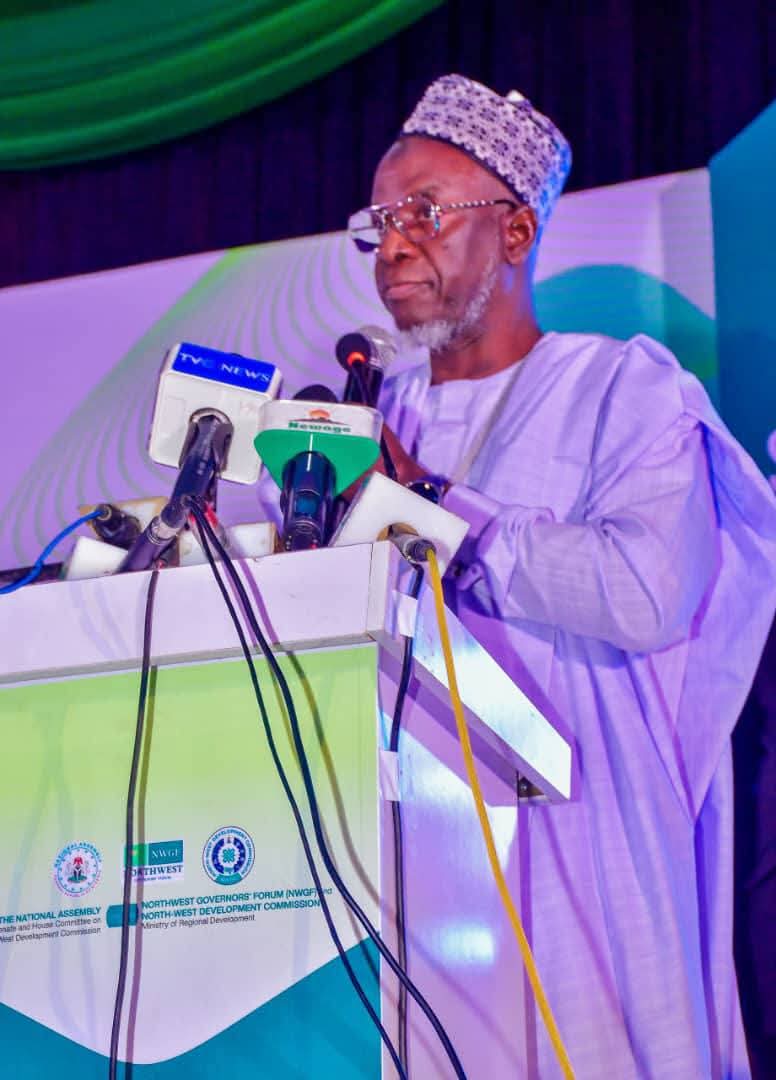
Represented by Deputy Governor Malam Faruk Lawal, Governor Radda yesterday spoke at the Northwest Stakeholders’ Development Summit held on Friday at the Yar’Adua Conference Centre, Murtala Square, Kaduna
.A statement signed by Ibrahim kaula Mohammad, chief press secretary to the Governor, said the summit brought together political leaders, technocrats, academics, traditional and religious leaders, and representatives of development institutions from all seven Northwest states.
Speaking on the theme “Advancing a Coordinated Regional Development Agenda for Northwest Nigeria,” Governor Radda stressed that sustainable development cannot be achieved by any state in isolation.
“We are not here merely as representatives of our states, but as champions of progress for the entire Northwest region,” Radda said.
He described the Northwest as rich in agriculture, human capital, culture, and resilience, but noted that challenges such as poor infrastructure, insecurity, and humanitarian displacement require collective action, shared resources, and coordinated planning.
Governor Radda highlighted poor interstate road networks as a major obstacle to Katsina’s economic growth. Inadequate roads increase transport costs, limit market access for agricultural produce, and slow regional trade.
“Good roads are critical to unlocking Katsina’s agricultural potential, boosting trade, strengthening food security, and positioning the state as a regional trade hub,” he said.
Radda also advocated the creation of a regional commodity market to support farmers, promote agro-processing, generate jobs in logistics and services, and enhance regional trade.
He cited Jibia, Mai’adua, Dankama, and Maigatari markets, noting their weekly trade volumes run into billions of naira despite poor infrastructure.
Addressing security challenges such as banditry, kidnapping, and cattle rustling, Governor Radda emphasized that sustainable development requires peace, noting that insecurity has also created deep humanitarian and socioeconomic consequences across the region.
He disclosed that Katsina State has adopted both kinetic and non-kinetic strategies, including dialogue, engagement, empowerment, and community-based interventions.As part of its non-kinetic security strategy, Katsina State created 35,903 jobs in the first year of the Radda administration.
This included 7,325 teachers, 6,652 ward heads, 2,016 Community Watch Corps members, 1,500 vigilante members, 200 civilian hunters, 7,545 Imams, Na’ibis and Ladans, and 10,665 ward, LGA and state security group members.Victims of banditry also receive free medical care, financial assistance, and support for bereaved families.
Radda reported significant security improvements, noting that areas like Jibia and Batsari have recorded no major incidents in the past 11 months.
The government has also implemented rehabilitation programs for victims, including vocational training, cash support, agricultural inputs, secure housing, and psychosocial care.
He further called on the North West Development Commission (NWDC) and the Federal Government to prioritise comprehensive rehabilitation, resettlement, and livelihood support for victims of banditry across the region.
According to the Governor, while security gains are being consolidated, sustainable peace will only be achieved if displaced and affected communities are adequately supported through trauma counselling, sustained medical care, safe resettlement, access to housing, potable water, sanitation, schools, and other basic infrastructure.
He added that livelihood restoration through skills acquisition, targeted cash assistance, and agricultural inputs is critical to rebuilding productivity, preventing relapse into insecurity, and promoting self-reliance among affected populations.
“Such coordinated interventions will ease the humanitarian burden, strengthen peacebuilding efforts, and accelerate inclusive development across the Northwest,” Radda said.
“By working together, setting clear goals, and defining roles, we can transform the Northwest region and deliver shared prosperity for our people,” Governor Radda added.
Earlier, Governor Uba Sani urged leaders to move from reports to results, stressing the need for actionable plans, timelines, and accountability.
He described the Northwest Development Commission (NWDC) as a strategic partner that can harmonize priorities, reduce duplication, and unlock regional economies of scale.
Deputy Senate President, Senator Barau Jibrin, emphasized that modern development must be deliberate, coordinated, and institutional.
Former Vice President, Arc. Namadi Sambo, noted that regional collaboration enhances competitiveness, efficiency, and development outcomes.
Chairman of the Senate Committee on the NWDC, Senator Babangida Hussaini, observed that although the Northwest contributes over 40% of Nigeria’s agricultural output and hosts major markets, the region still faces high poverty and unemployment.
He stressed that the NWDC is designed to aggregate regional priorities, harmonize development efforts, and provide long-term solutions to structural challenge.