By: Abdulrazaq Mungadi
Farmers in Sabon-garin Zambuk, Yamaltu-Deba Local Government Area of Gombe State, have reported a surge in agricultural productivity and household income following targeted interventions by the Agro-Climatic Resilience in Semi-Arid Landscapes Project (ACReSAL).
Beneficiaries say the combined provision of improved seeds and solar-powered boreholes has redefined farming operations in the community, particularly during the dry season.
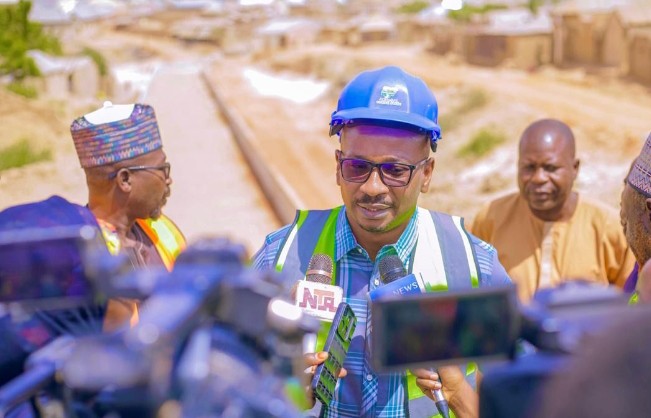
Muhammad Gardi, a tomato, maize and rice farmer in the area, described the intervention as transformational. Speaking with journalists during a visit to the community the farmer said, “we want to appreciate ACReSAL for coming to our aid in agriculture and water. They gave us improved tomato, maize and rice seeds, and we have seen a lot of changes. With a very small quantity of fertilizer, we are getting more yield”.
According to him, output has nearly doubled on the same plots of land. “Before the intervention, we harvested about five bags of maize from a piece of land. Now we harvest up to 10 bags. The same improvement applies to rice. Even tomatoes have improved. We now get over 30 baskets from a space where we used to produce around 20,” Gardi stated.
He attributed the gains to both seed quality and reliable access to water. “Previously, dry season farming was a major challenge because of water scarcity. Now, ACReSAL has constructed boreholes for our farms and solar-powered ones for the community. We no longer worry about water for irrigation or domestic use.”
Beyond farm productivity, the intervention is driving local economic activity. “The improved yield has helped our revenue generation. Buyers now come with vehicles to evacuate produce, and revenue payments to the local government have increased. As farmers, we no longer depend only on rainy season harvests to handle responsibilities like marriages and other family needs,” he added.