By: Raymond Enoch
Economic Community of West African States (ECOWAS) has reaffirmed its commitment to strengthening democratic governance and electoral integrity across the region, declaring its readiness to support transparent, credible, peaceful and inclusive elections as Nigeria begins preparations for its 2027 General Elections.
The regional Institution said sustained engagement with national electoral management bodies and other critical stakeholders remains central to safeguarding democratic institutions, strengthening public confidence in electoral processes and preventing election-related tensions that could undermine regional peace and stability.
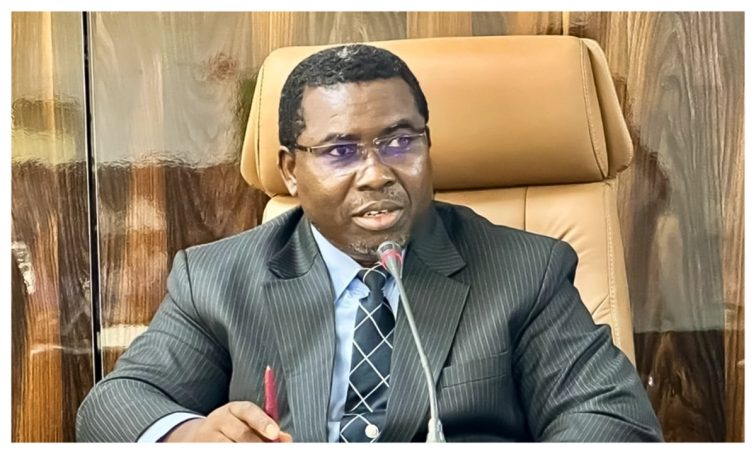
The position was reinforced by the Head of the ECOWAS Pre-Election Fact-Finding Mission to Nigeria and former Vice President of Sierra Leone, H.E. Victor Bockarie FOH, during the mission’s consultation with the management of the Independent National Electoral Commission (INEC), Federal Capital Territory, Abuja.
The engagement, held on Monday, October 26, 2026, marked a significant step in the mission’s broader consultations with Nigeria’s electoral stakeholders as ECOWAS intensifies its assessment of the country’s institutional and operational preparedness ahead of the 2027 General Elections.
Speaking during the meeting, FOH underscored the importance ECOWAS attaches to democratic consolidation, noting that the organisation’s responsibility to promote peace, stability and good governance across West Africa makes sustained dialogue with electoral institutions indispensable.
He explained that the mission’s engagement with INEC FCT was part of a deliberate regional effort to understand the state of electoral preparations, obtain relevant institutional perspectives and identify issues that could require attention before the elections.
His remarks reflect ECOWAS’ longstanding democratic philosophy that credible elections are not merely national political exercises but fundamental pillars of regional stability, constitutional order and public confidence in governance.
The mission’s engagement also reinforces the principle that electoral credibility must be built well before election day through institutional preparedness, transparent procedures, effective stakeholder coordination and the meaningful participation of citizens.
At the INEC FCT consultation, the commission provided an extensive briefing on its preparations, highlighting operational planning, voter registration, recruitment and training of election personnel, logistics, deployment of election technology, security coordination and voter education.
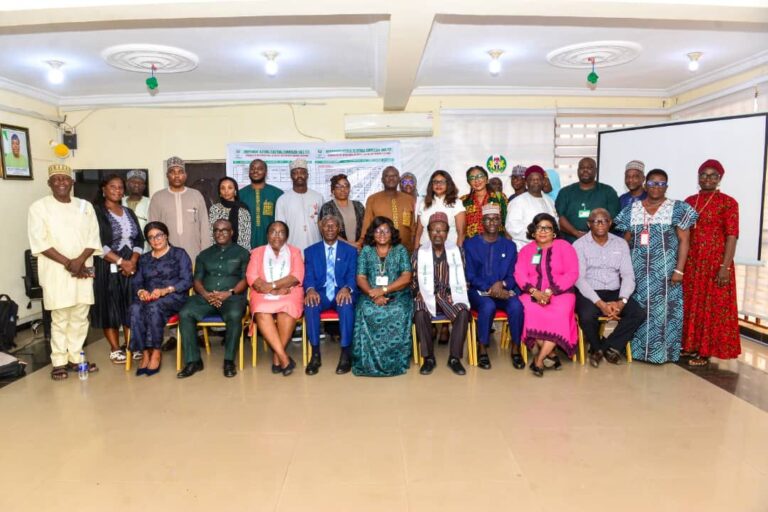
The briefing brought together the ECOWAS delegation and INEC FCT officials, including heads of departments and Electoral Officers from the six Area Councils. The delegation was received by the Administrative Secretary, Mrs. Abimbola Oladunjoye, on behalf of the Resident Electoral Commissioner.
INEC FCT officials disclosed that arrangements were underway to monitor electoral preparations across the six Area Councils, with mechanisms established to track progress, identify operational gaps and address emerging challenges.
One of the significant issues highlighted was the conclusion of the display of the voter register for claims and objections, during which 62 claims and no objections were recorded in the FCT.
However, the commission identified inadequate death records and limited public reporting as continuing challenges affecting the timely identification and removal of deceased persons from the voter register.
On personnel readiness, INEC FCT disclosed that recruitment of ad hoc election workers was ongoing, with members of the National Youth Service Corps expected to constitute a significant proportion of the election workforce.
The commission also highlighted preliminary sensitisation and training initiatives being undertaken through Community Development Service programmes to strengthen the capacity and readiness of prospective electoral personnel.
On logistics and election technology, officials reported that some non-sensitive election materials had already been received, while additional supplies were expected. Arrangements were also being developed for the distribution of sensitive materials closer to election day.
For ECOWAS, such consultations provide an opportunity to assess not only the administrative readiness of electoral institutions but also the broader conditions necessary for peaceful and credible democratic transitions.
The mission’s approach is particularly significant against the backdrop of persistent electoral governance challenges in parts of West Africa, where political tensions, institutional weaknesses, disinformation, declining public confidence and security threats have increasingly tested democratic resilience.
By engaging electoral management institutions ahead of elections, ECOWAS is reinforcing its preventive diplomacy framework, recognising that early assessment, constructive dialogue and institutional preparedness can help address vulnerabilities before they develop into larger electoral disputes or threats to stability.
FOH’s intervention therefore carries significance beyond the immediate consultation in Abuja. It represents the regional organisation’s determination to remain actively engaged with member states in protecting democratic values and strengthening the institutional foundations upon which credible elections depend.
As Nigeria approaches another major electoral cycle, the mission’s engagement sends a clear message about the importance ECOWAS places on electoral preparedness, institutional accountability and peaceful democratic competition.
The regional bloc’s position also underscores the importance of national ownership of electoral processes, with ECOWAS providing a framework for dialogue, assessment and regional cooperation in support of democratic institutions.
With consultations expected to extend across relevant electoral stakeholders, the fact-finding mission forms part of a wider effort to gather perspectives, examine preparedness and contribute to an environment in which the 2027 General Elections can be conducted peacefully, transparently and credibly.
For ECOWAS, the underlying message remains that democracy must be protected through continuous institutional engagement, regional solidarity and a shared commitment to the will of the people.(Paradigm News)