By: Austine Agbo Emmanuel
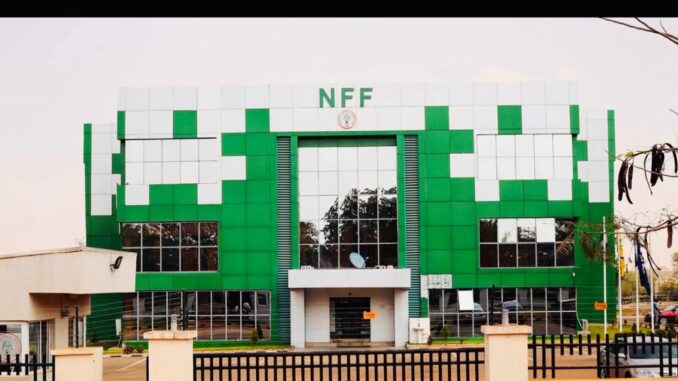
The headquarters of the Nigeria Football Federation (NFF) located inside the package B of Moshood Abiola National Stadium, Abuja is once again buzzing on Monday September 14, 2026.
This followed the much anticipated meeting of various structures of the Nigerian football scheduled for Abuja Continental hotel same day in the evening.
Ahead of the crucial stakeholders’ meeting, a joint delegation of world football governing body, FIFA, and the Confederation of African Football (CAF) is already in consultation with NFF management and Congressmen at the NFF headquarters.
Blueprint.ng correspondent that visited reports that security agencies, including operatives of the Department of State Services (DSS) and the Nigeria Police Force, have occupied Nigeria’s football house, stopping some stakeholders including top officials of the National Institute for Sports (NIS).
Blueprint.ng correspondent particularly observed that when a veteran sports journalist and special assistant media to the NIS Director-General Mr. Ben Ogbemudia made efforts to gain entrance into the NFF compound, he was bounced back by the DSS operatives.
The heavy security presence came as the international football bodies commenced a high-level assessment of the crisis rocking Nigerian football and the controversial restructuring of the NFF.
More than 20 security operatives, who arrived in several official vehicles, were deployed around the NFF secretariat, where they subjected visitors and stakeholders to rigorous screening and restricted access to the premises.
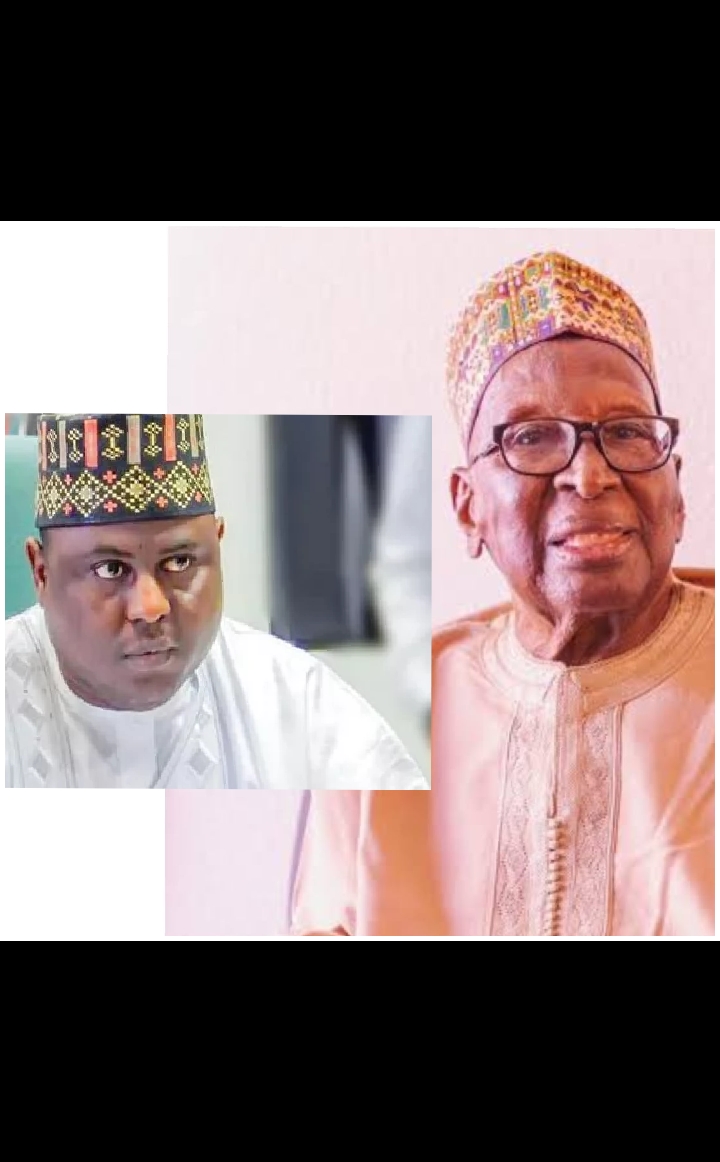
The development has heightened attention around the NFF headquarters, coming at a particularly sensitive period when FIFA and CAF are seeking to engage various stakeholders on the future of the federation following the resignation of former NFF President Ibrahim Gusau, the federation’s General Secretary Mohammed Sanusi and members of its Executive Committee.
Visitors seeking access to the NFF complex were subjected to security checks, with only a limited number allowed through the entrance.
The security personnel were strategically positioned around the premises, monitoring movements in and around the federation’s headquarters.
The operatives also reportedly said they had received an order from above barring journalists from entering the complex or operating within the secretariat.
The restrictions came shortly after an official vehicle from the State House was seen at the NFF premises delivering documents ahead of the management meeting.
The security buildup is significant because the NFF is currently at the centre of an international review of its governance and electoral processes.
The heightened security also coincided with the arrival of FIFA and CAF officials in Nigeria for a joint assessment mission scheduled to engage stakeholders between September 14 and 15.
The delegation arrived in the country on Sunday night ahead of the Abuja meetings.
According to the report, a combined team of Nigerian security operatives picked up the FIFA officials at the Nnamdi Azikiwe International Airport upon their arrival.
The mission follows a September 7 directive by FIFA and CAF suspending the ongoing NFF electoral process while the two bodies assess the circumstances surrounding the crisis.
FIFA and CAF have said the purpose of the mission is to engage relevant stakeholders and gather information before determining the appropriate next steps. They have also stressed that no final conclusion or decision on possible sanctions has been reached.
The development effectively places the planned NFF elective congress, which was expected to take place in Lafia, Nasarawa State, on September 27, on hold.
The current crisis escalated after Gusau resigned as NFF president on August 27, followed by the resignation of Sanusi and members of the federation’s Executive Committee.
The mass resignations created a leadership vacuum and triggered a broader restructuring process involving the Federal Government, the National Sports Commission, NFF, FIFA and CAF.
FIFA subsequently accepted the resignations of the principal NFF officials and agreed to continue discussions with the Nigerian government, the NFF administration and CAF on a roadmap for comprehensive reforms of Nigerian football.
At a meeting in Zurich on September 1, a Nigerian delegation led by National Sports Commission Chairman Shehu Dikko met FIFA officials to discuss the unfolding situation.
The NFF said the engagement was aimed at developing a roadmap for reforms that would produce a more inclusive, peaceful and stable federation capable of delivering improved results both on and off the pitch.
The Federal Government has also maintained that the reforms are intended to address longstanding structural and governance challenges within Nigerian football.
Ahead of Monday’s meeting, however, another controversy emerged over the composition and representation of stakeholders expected to meet the FIFA and CAF delegation.
The NFF selected nine state Football Association chairmen and 18 other representatives for the engagement with the visiting officials.
The representation has reportedly generated objectionsi from some stakeholders, particularly representatives of the players’ union and other groups that believe the process should provide broader and more balanced representation.
Harrison Jalla, a prominent voice in the players’ union and chairman of the Advocacy for Nigeria Football Reform Initiative, reportedly demanded greater representation for the players’ bloc.
The disagreement underscores the difficulty facing the reform process, with stakeholders not only divided over the future structure of the NFF but also over who should have a seat at the table during the discussions.
The meeting is therefore expected to provide FIFA and CAF with an opportunity to hear competing perspectives from the NFF administration, state Football Associations, players, coaches, referees and other stakeholders before deciding on the next stage of the intervention.
Beyond the leadership crisis and electoral controversy, financial accountability has also become a major issue in discussions about the future of Nigerian football.
Reports indicate that questions have been raised over the management of funds received by the NFF from FIFA and CAF, as well as government intervention funds.
The financial concerns have strengthened calls by some stakeholders for reforms that would improve transparency, accountability and financial management within the federation.
The international intervention therefore comes at a time when Nigerian football is facing questions not only about who should lead the NFF, but also about how the federation should be governed and administered in the future.
Despite the heightened expectations surrounding the Abuja meeting, FIFA and CAF have cautioned stakeholders against assuming that a predetermined outcome has already been reached.
The two football bodies are expected to listen to different stakeholders and assess the circumstances surrounding the NFF crisis before deciding on the appropriate course of action.
The assessment could ultimately influence the timetable and structure of the NFF’s next electoral process, the composition of its leadership and the broader governance framework for Nigerian football.
For now, the electoral process remains suspended, while the international football authorities continue their assessment.
The heavy security presence at the NFF secretariat on Monday has consequently added to the sense of anticipation surrounding the meeting, with the federation operating under unusually tight access restrictions as FIFA and CAF officials engage Nigerian football stakeholders.
With the future leadership of the NFF, the electoral process and the proposed reforms all under scrutiny, the Abuja meeting could become a defining moment in Nigeria’s attempt to resolve its latest football administration crisis.(Blueprints.ng)