By: Charles Aghedo
The Chairman of the Nigeria Union of Journalists (NUJ), Federal Capital Territory (FCT) Council, Grace Ike, has called for an evidence-based assessment of the Federal Government's education reforms, urging stakeholders to focus on practical outcomes in classrooms rather than policy pronouncements.
Speaking at the 2026 Annual Education Summit organised by the Education Correspondents Association of Nigeria (ECAN) in Abuja on Wednesday, Ike said the country's education sector requires sustained commitment, accountability and practical reforms that directly improve teaching and learning.
The summit, themed "Three Years of the Tinubu Administration: Assessing Reforms, Achievements and Challenges in Nigeria's Education Sector," brought together journalists, policymakers, education experts and other stakeholders to review the administration's performance in the sector.
Describing the theme as timely, Ike urged participants to undertake a sober and objective evaluation of the government's education agenda.
"Education remains the foundation of any serious nation," she said, stressing the need to assess whether reforms introduced over the past three years have translated into better learning outcomes, improved support for teachers, expanded access to education and reduced disparities between urban and rural schools.
While acknowledging efforts by the Federal Government to reform and reposition the education sector, she noted that major challenges persist, including inadequate funding, poor infrastructure, industrial disputes, the growing number of out-of-school children, learning poverty and weak alignment between education and labour market demands.
"At the same time, we must recognize that reform is a process, and no government can solve decades of structural weakness in a short time," Ike said. "Sustained commitment and genuine political will are what will ultimately determine success."
She also charged journalists to play a more active role in advancing education reforms by producing balanced, accurate and in-depth reports that amplify the voices of teachers, students, parents and school administrators while holding public officials accountable.
According to her, education should not be viewed solely through the lens of classroom performance, but as a critical driver of national productivity, innovation, social stability and human development.
She urged participants to use the summit to develop practical recommendations capable of improving Nigeria's education system rather than limiting discussions to rhetoric.
"Let this not be just another event with fine speeches, but a meaningful conversation that contributes to real change in Nigeria's education sector," she said.
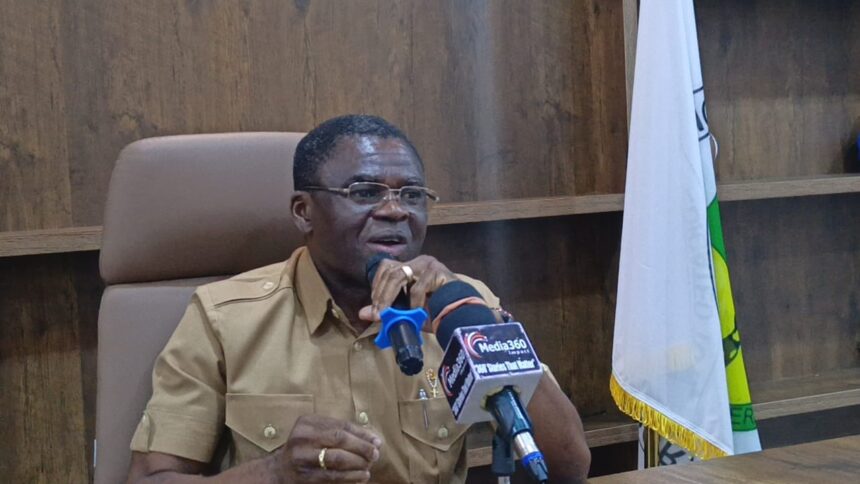
Also speaking at the summit, the Minister of Education, Dr. Tunji Alausa, announced plans by the Federal Government to conduct a nationwide household survey to determine the actual number of out-of-school children in Nigeria.
He said the Federal Ministry of Education would partner with the National Bureau of Statistics (NBS) to generate credible and up-to-date data to guide education policies and interventions.
According to the minister, existing estimates placing the number of out-of-school children between 15 million and 20 million may no longer accurately reflect the current situation.
He explained that the nationwide survey would provide a clearer picture of the scale and distribution of the challenge, enabling the government to design targeted interventions to improve school enrolment and retention.
Alausa disclosed that more than one million out-of-school children had been returned to classrooms over the past two years but stressed that reliable data remained essential for measuring progress and formulating effective policies.
He added that President Bola Tinubu's administration remains committed to evidence-based policymaking, noting that accurate data would also enable citizens and the media to hold the government accountable for its commitments.
The minister further urged journalists to move beyond routine event reporting by embracing investigative journalism that identifies gaps in the education sector and tracks government performance through verifiable facts.(Lead Fm Nigeria)