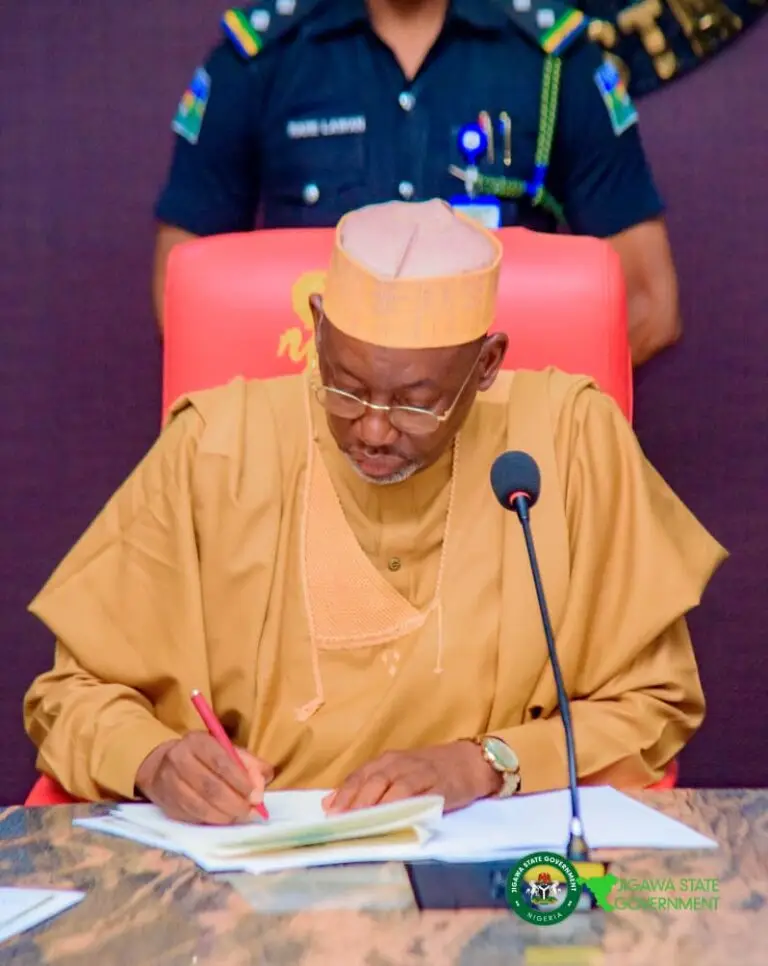
Gov. Umar Namadi on Monday signed two executive orders aimed at strengthening agricultural institutions, expanding the use of digital technology in farming and promoting commercially viable agricultural cooperatives in Jigawa State.
The signed orders establish the Jigawa Common Data Framework for the Digital Farmer Registry and the Jigawa Market-Oriented Cooperative Development Framework.
The signing represents an important step in the state government’s efforts to advance its Agricultural Transformation Agenda through policy reforms, institutional development, and strategic partnerships.
In remarks, the Director General of the Jigawa Agricultural Transformation Agency (JATA), Dr. Saifullahi Umar, said the two Executive Orders were issued to fulfill the State’s Mandatory Eligibility Criteria for participation in the Nigeria Sustainable Agricultural Value Chains for Growth (AGROW) Programme, a World Bank-supported initiative implemented by the Federal Ministry of Agriculture and Food Security in collaboration with participating states.
“By meeting these requirements, Jigawa has positioned itself among the first states in Nigeria to fulfil the mandatory eligibility conditions for enlistment and participation in the programme,” he said.
“The Common Data Framework will provide the institutional and regulatory foundation for a harmonized and reliable Digital Farmer Registry. The registry is expected to improve agricultural planning, support targeted government interventions, strengthen resource allocation, and promote transparency and evidence-based decision-making.
“The second Executive Order establishes the Market-Oriented Cooperative Development Framework, which is designed to strengthen agricultural cooperative institutions and make them more commercially responsive, while it will also promote farmers’ access to markets and financial services while encouraging greater private-sector participation across priority agricultural value chains.”
The frameworks are expected to provide stronger institutional support for farmers, improve coordination within the agricultural sector, and create better conditions for investment and sustainable growth.
(The syndicate news)