By: Umar Abdullahi
The Sokoto State Government has intensified efforts to reduce poverty, promote economic empowerment and improve the welfare of vulnerable citizens, including Internally Displaced Persons (IDPs), through policy reforms, capacity development and strategic partnerships.
The Commissioner for Budget and Economic Planning, Dr Bashir Muhammad Achida, reaffirmed the commitment of Governor Ahmed Aliyu’s administration to building resilient communities and ensuring that vulnerable populations have access to opportunities that promote self-reliance and sustainable livelihoods.
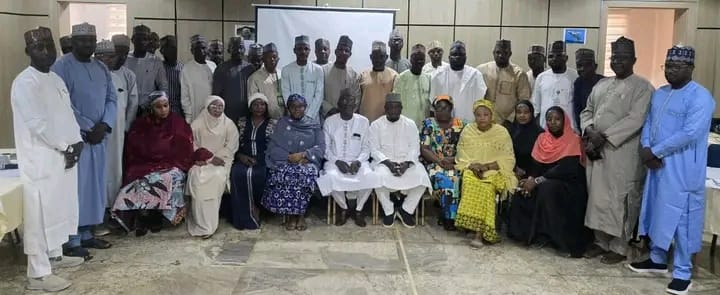
He stated this while declaring open a five-day TRANSFORM Capacity-Building Training on Social Protection, organised by the Ministry of Budget and Economic Development in collaboration with the International Labour Organisation (ILO) and UNICEF under the European Union-supported SUSI Project.
He also received a delegation of the Norwegian Refugee Council (NRC), led by its Country Humanitarian Access Manager, Mr Richard Alkali, during an advocacy and courtesy visit to the Ministry.
Dr Achida described social protection as a major priority under the administration’s Nine-Point SMART Agenda, noting that effective safety nets are essential for promoting social justice, reducing inequality and strengthening households’ ability to withstand economic and social shocks.
Addressing the plight of displaced persons, the Commissioner called for sustainable interventions that go beyond immediate humanitarian assistance.
He emphasised the need to expand access to education, psychosocial support and practical skills development to help IDPs rebuild their lives, become economically independent and contribute meaningfully to society.
He also advocated sustainable resettlement programmes that would facilitate the safe and dignified return of displaced persons to their communities whenever security conditions permit.
He commended the NRC and other development partners for their contributions to improving the living conditions of vulnerable populations and expressed optimism that stronger collaboration would deliver lasting results.
Highlighting the Ministry’s institutional efforts, Dr Achida disclosed that the Sokoto State Social Protection Policy Document was undergoing review and development.
He also revealed that chairmen of the state’s 23 local government areas had been engaged on the need to incorporate relevant interventions into their 2026 budgets to ensure effective implementation at the grassroots.
He stressed that sound policies must be matched with the technical knowledge and institutional capacity required for effective implementation.
He therefore urged participants at the TRANSFORM training to apply the knowledge acquired in designing, coordinating, financing and monitoring inclusive programmes that deliver measurable benefits to citizens.
The Commissioner appreciated the ILO, UNICEF, the European Union and other development partners for their technical and financial support, describing their contributions as vital to advancing the state’s development objectives.
In his remarks, the Permanent Secretary of the Ministry, Alhaji Buhari Umar Musheshi, emphasised effective coordination among government agencies and development partners to ensure that interventions align with the state’s priorities and avoid duplication of efforts.
He explained that the Ministry serves as a coordinating platform for relevant stakeholders, facilitating collaboration and promoting the effective delivery of government programmes.
On the NRC engagement, Alhaji Musheshi advised the organisation to submit its institutional profile for documentation and vetting.
He added that a draft Memorandum of Understanding (MoU) would be prepared for review before being forwarded to the Ministry of Justice for legal vetting.
Earlier, Mr Richard Alkali said the NRC delegation’s visit was aimed at strengthening institutional engagement, promoting collaboration and exploring partnership opportunities with the Sokoto State Government to address humanitarian and development challenges affecting vulnerable populations.
Other speakers at the TRANSFORM training included the ILO Country SUSI Project Manager, Mr Emanuel Danjuma; the State Coordinator of the National Health Insurance Authority (NHIA), Bashir Isah Ubandawaki; and the State Vice Chairman of the Nigeria Labour Congress (NLC), Comrade Dr Abdullahi Abubakar Yabo.
The engagements reflect the Sokoto State Government’s commitment to addressing vulnerability through coordinated policies, targeted interventions and strategic partnerships, with a clear focus on moving communities beyond immediate relief towards resilience, economic independence and sustainable development.
(New Telegraph)