By: Austine Agbo Emmanuel
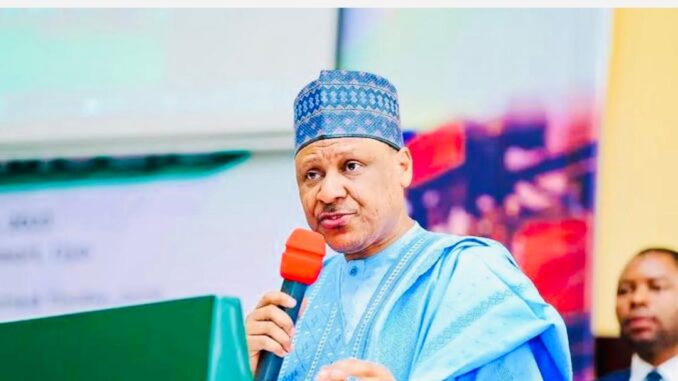
The Minister of Information and National Orientation, Mohammed Idris, has called for deeper collaboration between the media and security agencies as part of efforts to address Nigeria’s evolving security challenges and strengthen national development.
The minister made the call on Thursday while delivering his address as chairman of the occasion and chief host at the National Security Summit organised by the Nigeria Union of Journalists (NUJ) in collaboration with the Department of State Services (DSS) at the Abuja Continental Hotel and Towers.
The summit, which attracted journalists, security experts, government officials, academics, civil society organisations and other stakeholders, was themed “Media and Security Agencies as Partners in Nation Building.” Blueprint reports
According to Idris, the summit came at a critical moment when security threats across the world are becoming increasingly sophisticated, requiring greater cooperation among institutions responsible for safeguarding national stability.
Media and security agencies share common responsibility
The minister noted that both the media and security agencies occupy strategic positions in the nation’s development architecture and must work together in pursuit of the national interest.
He explained that while security agencies are responsible for protecting lives, property and national sovereignty, the media serves as a watchdog, a platform for public discourse and a bridge between government and citizens.
According to him, both institutions ultimately pursue the same goal of promoting peace, unity and development.
“The relationship between the media and security agencies must therefore be founded on mutual respect, professionalism, trust and an appreciation of their complementary roles,” he said.
Idris stressed that security operations often require discretion and strategic communication, while journalists have a constitutional obligation to inform the public and promote accountability.
He argued that when both responsibilities are properly balanced, they become powerful tools for strengthening national security and public confidence in government institutions.
Insecurity becoming more complex globally
The minister observed that security threats across the globe have evolved significantly in recent years.
He identified terrorism, violent extremism, cybercrime, misinformation, organised crime, separatist agitations and transnational criminal networks as some of the major threats confronting nations today.
According to him, these challenges have compelled governments around the world to rethink conventional security strategies and embrace more collaborative approaches.
“Nigeria is not immune to these realities,” he stated. Nigeria.info.com
"As Africa’s largest democracy and most populous nation, our security environment presents unique challenges that require collective action, strategic communication, responsible journalism and effective collaboration among all stakeholders.”
Tinubu administration recording security gains
Idris highlighted what he described as significant security achievements recorded under the administration of President Bola Ahmed Tinubu.
He said security remains a central pillar of the President’s Renewed Hope Agenda, noting that meaningful development cannot take place in an atmosphere of insecurity.
According to him, the Federal Government has adopted a comprehensive approach that combines military operations, intelligence gathering, technological innovation, inter-agency cooperation and community engagement.
The minister disclosed that security forces have continued to neutralise terrorists, bandits, kidnappers and other criminal elements across different parts of the country.
He further stated that several terrorist commanders had been eliminated while numerous criminal camps and hideouts had been dismantled through sustained operations.
The minister added that hundreds of kidnapped victims had also been rescued through coordinated efforts involving the Armed Forces of Nigeria and other security agencies.
Progress recorded across major theatres of operation
Providing further insight into the government’s security efforts, Idris said military offensives in the North East had significantly weakened the operational capabilities of terrorist groups operating in the region.
He also noted that intensified operations against banditry and kidnapping in the North West and North Central had yielded positive outcomes.
According to him, intelligence-led operations continue to strengthen the nation’s capacity to respond to emerging threats and criminal activities.
The minister revealed that the Federal Government has invested heavily in modern military hardware, intelligence infrastructure, surveillance systems and capacity building programmes for security personnel.
These investments, he said, are improving operational effectiveness and enhancing the ability of security agencies to respond rapidly to threats.
Government addressing root causes of insecurity
Beyond military action, Idris said the Tinubu administration is also focused on addressing the socio-economic factors that contribute to insecurity.
He identified poverty, unemployment, lack of educational opportunities and inadequate infrastructure as some of the conditions that often fuel criminality and social unrest.
According to him, ongoing economic reforms, youth empowerment programmes, infrastructure development projects and social intervention initiatives are designed to tackle these underlying challenges.
He maintained that creating opportunities and improving citizens’ welfare remain essential components of the government’s long-term security strategy.
Journalists urged to combat fake news and misinformation
The minister expressed concern over the growing threat posed by misinformation and disinformation, particularly in the digital age where false information can spread rapidly across multiple platforms.
He warned that irresponsible reporting and the circulation of unverified information could undermine security operations and create unnecessary panic among citizens.
According to him, journalists must continue to uphold the principles of professionalism, accuracy, fairness and ethical reporting.
“National security is not served when misinformation is amplified without verification. Neither is it served when legitimate public concerns are ignored,” he stated.
He stressed the need to strike a balance between the public’s right to information and the imperative of protecting national security interests.
Strengthening trust between media and security institutions
Idris also challenged security agencies to improve their engagement with the media through the timely release of accurate and credible information.
He argued that transparency and effective communication are critical to building public trust and confidence.
As Minister of Information and National Orientation, he pledged the Federal Government’s commitment to strengthening cooperation between journalists and security institutions through dialogue, capacity building programmes and strategic communication initiatives.
He described the interactive sessions and discussions scheduled during the summit as important opportunities for stakeholders to exchange ideas, identify best practices and develop practical solutions to contemporary security challenges.
Security remains a collective responsibility
The minister concluded by emphasising that security is not solely the responsibility of government and security agencies.
According to him, citizens, traditional institutions, religious leaders, civil society organisations and the media all have important roles to play in safeguarding the nation.
He urged participants to utilise the summit as a platform for constructive engagement and the development of actionable recommendations capable of strengthening national security.
On behalf of the Federal Government, Idris commended the Nigeria Union of Journalists and the Department of State Services for organising the summit.
He expressed optimism that the outcomes of the deliberations would deepen collaboration between the media and security agencies and contribute to the emergence of a safer, more united and prosperous Nigeria.(Blue Print)