Cancer is no longer a distant threat in Nigeria, it is claiming lives quietly and relentlessly, with late diagnosis and poor access to care worsening survival chances.
As global deaths climb into the millions each year, the Federal Government says it is time to shift from fire-fighting to prevention and early action.
In a renewed push to curb the growing cancer burden, the Federal Government has unveiled two major policy frameworks to strengthen prevention, early detection, diagnosis and treatment across Nigeria.
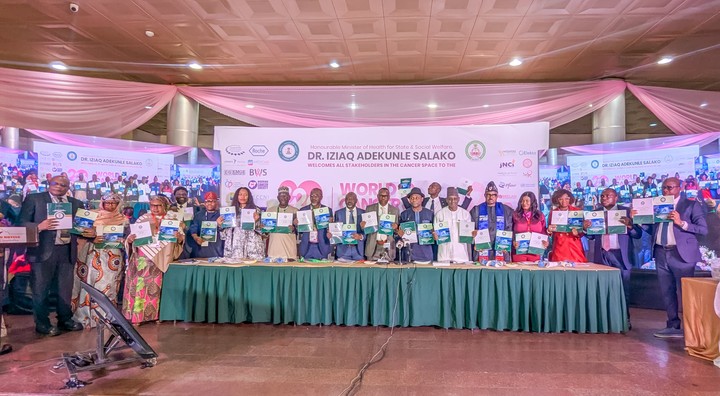
The National Nuclear Medicine Policy and Strategic Plan, the first of its kind in the country, and the National Cancer Control Plan (NCCP) 2026-2030 were launched in Abuja during a ministerial briefing to mark World Cancer Day 2026.
Minister of State for Health and Social Welfare, Dr Iziaq Adekunle Salako, said the policies align with President Bola Ahmed Tinubu’s Renewed Hope Agenda, noting that cancer cases are projected to surge globally, with low- and middle-income countries like Nigeria worst affected.
He stressed that over 40 per cent of cancer deaths are linked to preventable risk factors such as tobacco use, alcohol consumption, obesity, unhealthy diets and air pollution.
To expand early detection, Dr Salako announced that eight preventive oncology clinics are now fully operational in federal tertiary hospitals in Abuja, Lagos (Ebute-Meta), Benin, Enugu, Sokoto, Gombe, Kano and Ile-Ife, offering routine screening services.
He also revealed that free cancer screening will be provided nationwide throughout February in collaboration with the National Institute for Cancer Research and Treatment (NICRAT).
NICRAT’s Director-General, Prof Usman Malami Aliyu, said the agency is strengthening cancer research, registries and screening centres to move Nigeria’s response from late-stage treatment to prevention and timely diagnosis, while the government reaffirmed partnerships with global bodies to reduce cancer-related deaths and improve the quality of life of patients.