The Federal Government has reaffirmed its commitment to protecting national security and safeguarding the freedom and safety of journalists, describing the media as strategic partners in promoting national stability through responsible and professional reportage.
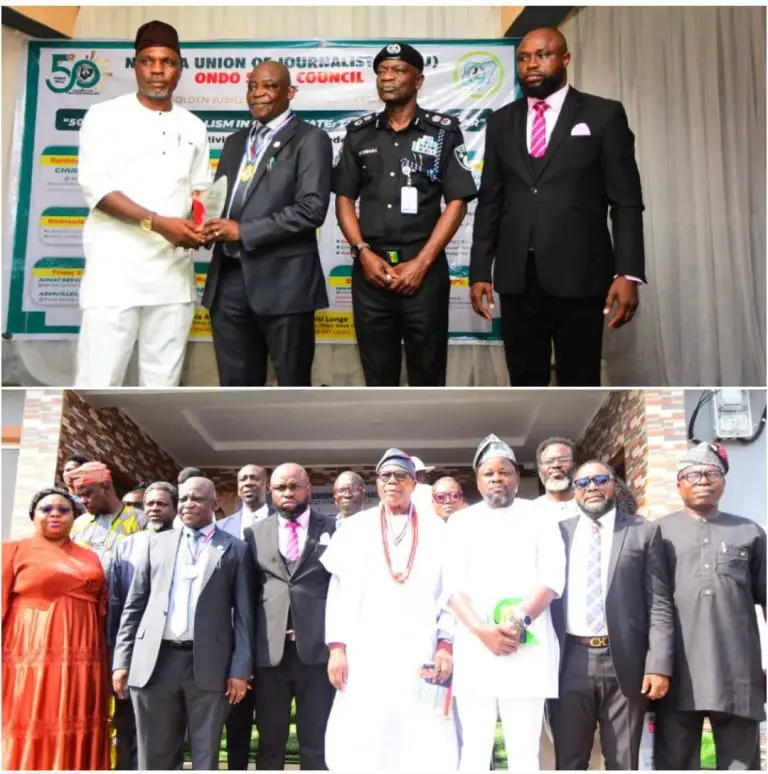
The Minister of Information and National Orientation, Mohammed Idris, stated this at a one-day North-West Zonal Security Summit for Journalists organised by the Kano State Government in collaboration with the Nigeria Union of Journalists (NUJ) in Kano.
The summit was themed “Journalism in a Challenging Security Environment: Safety, Professionalism and Media-Security Cooperation in the North-West.”
The minister, who was represented by the Director-General of Voice of Nigeria (VON), Jibrin Baba Ndace, said the theme addressed critical issues affecting democracy, national security and stability, particularly in view of the persistent security challenges confronting the North-West region.
He identified banditry, kidnapping and terrorism as major threats in the region, noting that journalists reporting under such difficult conditions face considerable risks, making their safety a matter of national concern.
Idris urged media organisations to strengthen safety protocols, provide specialised training and ensure adequate support for journalists assigned to high-risk areas.
He, however, emphasised that journalists must balance their safety with professionalism, accuracy and responsible reporting.
The minister warned against the circulation of unverified reports, misleading images, speculative casualty figures and premature disclosure of sensitive security information, saying such practices could create panic, endanger lives and undermine security operations.
He urged journalists to understand the peculiar security situations in different states and avoid relying on unverified social media content.
According to him, responsible journalism does not mean suppressing legitimate information or abandoning the media’s watchdog responsibility, but requires sound editorial judgment and an appreciation of the wider consequences of reporting.
He also called for stronger collaboration and mutual trust between journalists and security agencies, urging the latter to provide timely and credible information, strengthen their media relations structures and maintain regular engagement with media organisations.
In his welcome address, NUJ National President, Comrade Alhassan Yahaya, said protecting journalists and press freedom was essential to democratic governance and sustainable peace.
He observed that persistent insecurity across the North-West had transformed routine reporting into a high-risk assignment, with journalists increasingly exposed to intimidation, abduction and violence.
Yahaya called for concrete measures to protect media professionals, including the establishment of a permanent rapid-response communication channel between the NUJ and security agencies, mandatory newsroom safety policies, and expanded hostile-environment and digital security training.
He also advocated prompt and transparent investigations into attacks against journalists.
The NUJ president stressed that journalists were neither enemies of the state nor adversaries of security institutions but partners with distinct and complementary responsibilities.
He urged participants to uphold accuracy, fairness and ethical restraint while reporting security matters, warning against sensationalism and the publication of unverified information.
Declaring the summit open, Kano State Governor, Abba Kabir Yusuf, represented by his Deputy, Alhaji Murtala Sule Garo, pledged his administration’s commitment to working closely with journalists to promote peace and security.
The governor described the media as a strategic partner in governance, public enlightenment, accountability and the promotion of peaceful coexistence.
He said addressing insecurity required collective responsibility involving government, traditional institutions, religious leaders, civil society organisations, the media and citizens.
Yusuf further urged journalists to promote dialogue, discourage hate speech and ensure that public discussions contribute to finding solutions to security challenges.
Earlier, the Kano State Commissioner for Information and Internal Affairs, Alhaji Sunusi Bature Dawakin Tofa, described the state government as media-friendly.
He disclosed that the government had spent over N200 million supporting journalists, while more than N500 million had been expended on their participation in conferences, seminars and other capacity-building programmes.
At the technical session, Professor Umar Pate, President of the Society of Nigerian Broadcasters, presented a paper on “Journalism Profession and Ethical Responsibility in Conflict and Security Reporting: Balancing Public Interest with National Security.”
A retired Brigadier-General, Dr Sani Usman Kuka Sheka, also delivered a paper on “Journalists in a Challenging Security Environment: Understanding Threats, Risk Assessment and Strategies for Protection in the North-West.”
Professor Sule Ya’u Sule provided further contributions during the technical discussions.
The one-day summit was attended by former NUJ National President, Dr Chris Isiguzo, and delega¯tes from the seven states of the North-West region.
(Insight pulse)