The International Press Centre (IPC) has urged journalists and media organisations to embrace professional, issue-based and accountability journalism ahead of the 2027 general elections, stressing the need for credible, balanced and citizen-centred reporting to strengthen democratic governance.
The International Press Centre (IPC) has urged journalists and media organisations to embrace professional, issue-based and accountability journalism ahead of the 2027 general elections, stressing the need for credible, balanced and citizen-centred reporting to strengthen democratic governance.
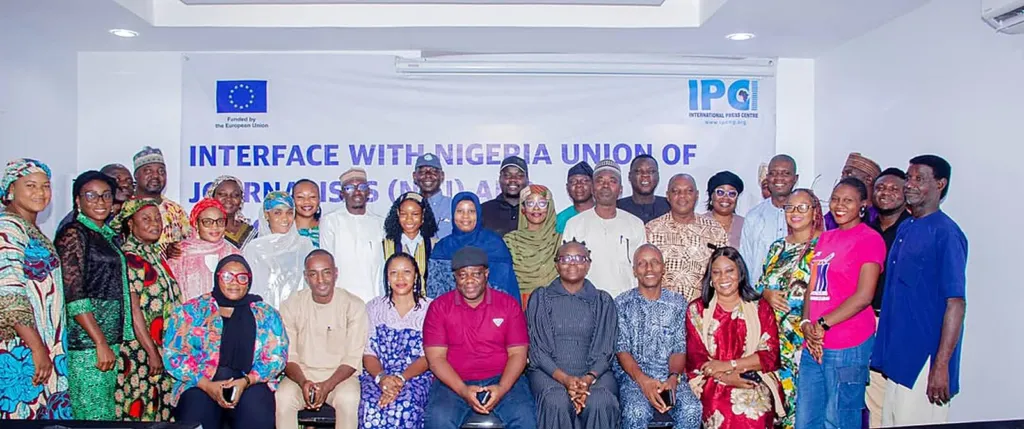
The Executive Director of IPC, Dr Lanre Arogundade, made the call in his welcome remarks at an interface with members of the Nigeria Union of Journalists (NUJ), editors and publishers held in Yola, Adamawa State.
Arogundade, who was represented by the Programme Manager of IPC, Mrs Stella Nwofia, said the media had a critical responsibility to promote democratic accountability by providing citizens with reliable, inclusive and public-interest information before, during and after the elections.
He observed that elections went beyond political campaigns, rallies, candidates and the announcement of results, noting that they also reflected citizens’ aspirations, concerns and expectations of leadership.
He therefore challenged journalists to move beyond event-driven electoral coverage to substantive and issue-based reporting that interrogates campaign promises, verifies political claims and monitors the performance of elected officials.
According to him, greater attention should be given to critical issues affecting Nigerians, including the economy, education, healthcare, security, employment and infrastructure, while ensuring adequate representation of women, youths, persons with disabilities and other vulnerable groups in electoral discourse.
The IPC Executive Director cautioned that sensationalism, unverified reports, inflammatory statements and the spread of misinformation and disinformation could undermine public confidence, heighten social divisions and weaken democratic institutions.
He urged media organisations to strengthen fact-checking and verification mechanisms, emphasising that accuracy, fairness, balance and conflict-sensitive reporting must remain fundamental principles of electoral journalism.
Arogundade also highlighted the growing influence of digital platforms in shaping electoral narratives, observing that although they had expanded opportunities for information sharing and public participation, they had equally heightened the spread of false information, manipulated content, hate speech and divisive narratives.
He consequently advised journalists not to sacrifice accuracy on the altar of speed, particularly when reporting politically sensitive issues.
He further stressed the importance of protecting the safety and professional independence of journalists, insisting that media practitioners must be allowed to discharge their legitimate responsibilities without intimidation, harassment or unlawful interference.
Arogundade said the success of the engagement should not be measured merely by attendance and discussions but by the quality of stories published, political claims verified, citizens’ concerns amplified and accountability questions raised ahead of the 2027 general elections.
In a paper presentation, Dr Shedrack Idi, Head of the Department of Public Relations, Faculty of Communication and Media Studies, Taraba State University, Jalingo, examined the 2027 general elections within the context of democratic and accountability reporting.
His presentation, titled “2027 General Elections in the Context of Democratic and Accountability Reporting: Scanning the Electoral Environment and Reporting Citizens’ Priority Concerns,” focused on the need for journalists to identify and report issues that directly affect the electorate.
Similarly, Olusola Oludiran of Nigeria Democratic Report (NDR) delivered a presentation on integrity and fact-checking for democratic and accountability reporting, highlighting basic fact-checking tools, techniques and practical demonstrations on InfoVerify.
In his remarks, the Chairman of NUJ Adamawa State Council, Comrade Abdullahi Ibrahim, commended IPC for organising the capacity-building engagement, describing it as an opportunity to broaden journalists’ understanding of their professional responsibilities ahead of the 2027 elections.
Ibrahim said the programme would strengthen participants’ capacity to move beyond conventional reporting and embrace fact-checking, verification and accountability as guiding principles of responsible journalism.
He urged journalists to deploy their professional skills towards promoting informed public participation, holding political office seekers accountable and ensuring that citizens’ priority concerns receive adequate media attention.
The engagement also featured interactive sessions between participants and facilitators, focusing on electoral reporting strategies, scenario-setting ahead of 2027, practical case studies, media obligations and professional commitment.
Participants equally examined an action plan for effective collaboration and the strategic repositioning of journalism to enhance democratic accountability and public-interest reporting.
The engagement was organised under Component Four, Support to Media, of the European Union Support to Democratic Governance in Nigeria (EU-SDGN III) Programme.
The IPC Executive Director appreciated the NUJ Adamawa State Council for facilitating the engagement, as well as the resource persons and the European Union for providing funding support for the programme.
(Insight pulse)