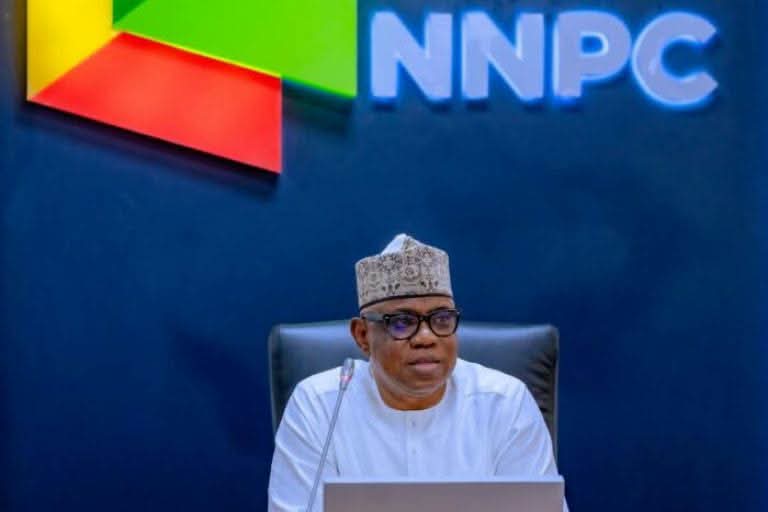
Motorists have expressed frustration over difficulties accessing the Nigerian National Petroleum Company Limited (NNPCL) petrol discount, saying the benefit is restricted to customers who use the company's mobile application.
The complaints followed the Federal Government's announcement of a temporary reduction in petrol prices aimed at easing the financial burden on Nigerians amid rising living costs.
Checks in Abuja on Sunday showed that petrol was selling for N1,405 per litre at NNPCL filling stations for customers paying directly at the pumps, while users of the company's mobile application paid N1,339 per litre, representing a N66 reduction.
The Minister of Finance and Coordinating Minister of the Economy, Taiwo Oyedele, had announced the temporary price reduction as part of measures to provide relief to consumers.
A motorist, Babatunde Atoye, told newsmen that the discount was not automatically available to customers buying petrol at the stations.
He said motorists had to access the reduced price through the NNPCL mobile application.
A filling station attendant, who spoke on condition of anonymity, also said customers were required to make payments through the application to enjoy the discount.
Another motorist, Abdulrahim Malik, questioned the accessibility of the arrangement, particularly for Nigerians without smartphones or the digital skills required to use the platform.
“How do people who do not have access to Android phones benefit from the discount? Some people cannot read or write, let alone access Android phones. How can they use the digital application?” he asked.
A stakeholder, George Ochendu, commended the Federal Government for the price reduction but warned that network challenges and difficulties navigating the application could prevent many Nigerians from benefiting.
He noted that while petrol sold for N1,405 per litre at the pump, customers using the application paid N1,339.
Similarly, a consumer, Toyin Daniel, expressed concern that motorists unfamiliar with digital platforms would be excluded from the relief measure.
Public affairs analyst Jide Ojo said the discount could have limited nationwide impact because NNPCL's retail outlets were relatively few compared with the number of filling stations operated by other marketers.
He argued that motorists should not have to travel long distances or spend valuable time searching for NNPCL stations to access cheaper petrol.
Ojo also maintained that petrol at N1,339 per litre remained expensive for many Nigerians, calling for more substantial reductions in energy costs.
He urged the Federal Government to clarify how it intended to extend the benefits of cheaper petrol to consumers across the country.
The analyst further raised concerns about crude oil supply to the Dangote Refinery, arguing that the government should consider supplying crude at a discounted rate in exchange for lower prices of refined petroleum products.
According to him, such an arrangement could make cheaper petrol available through more retail outlets rather than limiting the discount to selected NNPCL stations.
Ojo added that Nigeria's reported 20 per cent equity interest in the Dangote Refinery could provide an opportunity to strengthen transparency and accountability in monitoring crude oil supplies.
He warned that restricting access to discounted petrol could result in queues, lost working hours and additional transportation expenses for motorists.
Meanwhile, economist Aliyu Illias said Nigeria had yet to fully exploit the economic potential of its petroleum resources despite decades of oil and gas production.
Illias argued that the country had failed to develop sufficient refining capacity to meet domestic demand and maximise the value of its crude oil resources.
He noted that the Dangote Refinery represented a significant development in domestic refining but said its impact on citizens' livelihoods had yet to meet expectations.
The economist also called for greater investment in the development of petroleum by-products and alternative energy sources, including compressed natural gas (CNG), while warning that the global transition away from fossil fuels posed a long-term challenge to Nigeria's economy.
He urged the government to diversify the economy, strengthen domestic refining and maximise the benefits of the country's oil and gas resources while global demand remained significant.
The controversy over the NNPCL discount has raised questions about whether the temporary relief measure can reach ordinary Nigerians equitably, particularly those without reliable internet access, smartphones or the digital skills required to use the application.(Gist E-paper)